







This isn’t a piece about advocating for one gender over another, and it’s certainly not about identity. It’s about cognition and how people think, perceive, decide and coordinate — and how the ways we think and decide shape victory or defeat on the modern battlefield.
Every person carries a unique cognitive fingerprint, shaped by the way they were raised, the beliefs they hold, the lessons they’ve learned, and the environments that tested them. No two people process risk, creativity, or adversity in exactly the same way. After decades in leadership — in boardrooms, on operations floors, and inside crisis response centers — one truth has been consistent, winning has nothing to do with conformity. Winning comes from building the right team, not the identical team.
Cybersecurity is a battlefield unlike any that came before it. It doesn’t reward physical strength, size, or brute force. It’s a contest of cognition — of perception, logic, and timing — where the most powerful weapon is the human mind. Cyber is the great equalizer. A small, well-organized team of thinkers can defeat a much larger, well-funded adversary simply by outthinking them. The fight doesn’t play out in trenches or airspace; it unfolds in data streams, in milliseconds, across invisible networks.
But as we enter an era defined by drones, AI, and cyber warfare, we can no longer rely on a single playbook or mindset. The notion that every defender should think, act, and solve problems the same way is not just outdated — it’s dangerous. A “one-size-fits-all” approach to cybersecurity ignores the simple truth that different ways of thinking produce different forms of advantage.
Some people thrive on pattern recognition — they see the subtle signals of intrusion buried in noise. Others excel at empathy, anticipating what a human attacker or insider might do next. Some are driven by risk and intuition, comfortable making rapid decisions with incomplete data. Others are methodical, reflective, and precise — able to manage complex response sequences without losing sight of detail. None of these cognitive styles are universally superior, but when you combine them intentionally, they create the asymmetric high ground that modern defense demands. 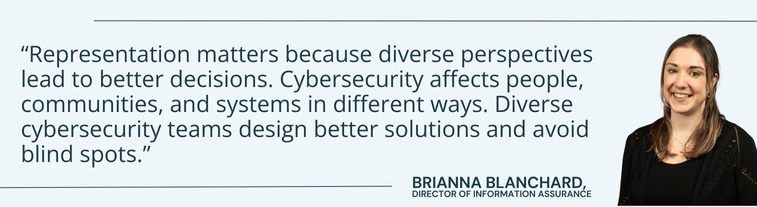
Ignoring that diversity, suppressing it in the name of efficiency or hierarchy, erodes our advantage. It means leaving untapped capability on the bench. It means designing organizations that are optimized for yesterday’s threats, not tomorrow’s. In the electronic battles to come, where the opponent is as likely to be a human with a keyboard as a machine with learning, victory will depend less on raw talent and more on cognitive orchestration.
Leaders in cybersecurity must now level up. It’s not enough to hire smart people and assume diversity will take care of itself. The next era of leadership will demand intentional architecture, deliberate team design that balances thinkers and doers, analysts and visionaries, fast reactors and slow reasoners. It means creating systems and cultures where every cognitive strength has a place and purpose.
Training our cyber warriors from a single, uniform playbook might feel efficient today — but it risks building fragile defenses tomorrow. We may not realize the cost of that uniformity until it’s too late — until we’re outmaneuvered by an adversary who used diversity of thought as a weapon.
The future of cybersecurity will not be won by size, by noise, or by sheer manpower. It will be won by the teams that think differently, that listen to the quiet voices, that see what others overlook, and that adapt faster than the playbook allows. The teams that embrace that philosophy — that cognitive diversity is not political correctness, but a tactical advantage — will define the high ground of the electronic battlefield.
The New Asymmetry: Why Cybersecurity Needs the Female Playbook
Cybersecurity is not a level playing field. It is an asymmetric battlefield where speed, perception, and decision-making determine who dictates tempo and who plays catch-up. Across neuroscience, performance analytics, and lived experience, we see consistent evidence that men and women often approach risk, attention, and problem-solving differently. Those differences are not deficiencies to sand down. They are strategic levers.
I’ve always loved the game of soccer and I’ve always been impressed by the US Womens Soccer program and their dominance year over year. If Emma Hayes is a new name: she’s one of the most accomplished coaches in modern football (soccer), having built trophy-winning teams at Chelsea Women before taking over the U.S. Women’s National Team. Her book, A Completely Different Game: My Leadership Playbook, isn’t about formations—it’s a manual for leading high-stakes teams under pressure. Hayes argues that culture beats slogans (“don’t laminate it, live it”), that leaders must know their people as humans first, that organizations need “truth-tellers” who can challenge assumptions, and that progress comes from embracing failure rather than worshiping a flawless “hero.” Translate that playbook to cybersecurity and you get a clear mandate: build psychologically safe teams that learn fast, reward reproducible wins over heroics, and design daily rituals (post-mortems, red/blue drills, clear escalation paths) that make security a lived behavior, not a poster on a wall. When you combine that leadership operating system with cognitive diversity, including gender-linked tendencies like integrative, context-rich reasoning and calibrated risk, you create defenders who out-maneuver adversaries by design, not by luck.
This piece argues for treating gender-linked ways of thinking as an asymmetric weapon system. We’ll map where those strengths matter most—threat intelligence, detection engineering, incident response, red/purple teaming, policy and risk—and show how to build a culture that attracts, empowers, and retains women so the advantage actually stays on the field.
A Completely Different Game
If you’ve ever watched Emma Hayes coach, you know she doesn’t just command a football match — she orchestrates it like a strategist commanding a battlefront. Hayes, now head coach of the U.S. Women’s National Team, spent over a decade building Chelsea Women into a dynasty not through brute athleticism, but through something much rarer in elite sport: intentional diversity of thought. Her locker room was full of players who approached the game differently — tacticians, creators, risk-takers, stabilizers — and she didn’t try to flatten those differences. She weaponized them.
In her book, A Completely Different Game: My Leadership Playbook, Hayes reflects on that philosophy. She rejects the fantasy of the “unicorn leader”, the idea that one person or one mindset can win alone, and instead argues that success comes from constructing teams where different kinds of intelligence, emotion, and energy coexist. She talks about knowing your people so well that you understand not just their position on the field, but how they see the field — how they process stress, read motion, and make decisions when chaos breaks loose. Hayes built champions by aligning cognitive diversity with tactical purpose. She didn’t ask players to conform, she asked them to connect.
That idea — that how we think, perceive, and decide can be a weapon — is exactly what cybersecurity has yet to fully understand. The modern cyber domain mirrors the world Hayes coaches in: fast, fluid, unforgiving. Every opponent is watching, adapting, and probing for weakness. There are no half-time adjustments in cyber. There are no substitutions. Every defender and every analyst is on the field every second the network is live.
In women’s football, analysts have observed a pattern: women often choose different shooting locations than men — not because they’re less capable, but because they process risk, space, and opportunity differently. They calibrate for probability. They weigh context. They see the whole picture before they strike. Hayes never saw that as a limitation, she saw it as a strategic truth. Her teams leaned into their cognitive rhythm and made it part of their identity.
Translate that mindset to cybersecurity and it becomes clear how narrow our industry’s “playbook” still is. For decades, we’ve recruited and trained for sameness — for a singular archetype of the analyst, the hacker, the incident commander. We’ve rewarded the same problem-solving patterns, taught the same cognitive shortcuts, and valorized a narrow brand of risk-taking that looks a lot like traditional heroism. But the digital battlefield doesn’t reward ego, it rewards adaptability.
Just as Hayes built a roster where different minds created a more complete game, cybersecurity leaders must build teams where different ways of thinking create a more complete defense. The art of anticipating an attacker’s next move isn’t just technical — it’s psychological, emotional, and deeply human. Some people will think like the attacker. Others will think like the victim. Some will visualize the system; others will feel the tension in the narrative. The organizations that harness those distinctions instead of erasing them will define the next generation of cyber superiority.
The battlefield has changed. It’s no longer the strongest or the loudest who win — it’s the teams that can think in layers, shift perspectives in real time, and exploit cognitive asymmetry the way great coaches exploit space. The sooner we accept that cybersecurity is not a single game played one way, the sooner we’ll start winning the ones that matter.
What the Evidence Actually Says
The science is catching up to what good coaches and commanders have known all along — not everyone sees the battlefield the same way, and that’s a good thing.
Neuroscientists studying high-performance teams from fighter pilots to professional athletes, have mapped distinct cognitive profiles that influence how people perceive threats, process information, and decide under stress. Men and women, on average, tend to use slightly different neural strategies to reach the same outcomes. Men show stronger front-to-back connectivity within each hemisphere of the brain, a wiring pattern that favors spatial reasoning, rapid coordination, and linear action. Women show denser cross-hemispheric connections between the left and right sides, enabling faster integration of context, intuition, and emotion into decision-making. Neither pattern is “better.” They’re simply built for different kinds of problems.
When performance analysts examined global soccer data, they found that women and men approached scoring differently. Men took more long-range shots — high risk, high reward — while women took more close-range shots with higher probability of success. The female game, as one study put it, was “more deliberate, more connected, and more context-driven.” That same pattern shows up far from the pitch. In business, intelligence, medicine, and defense, men are statistically more willing to act under incomplete information, while women are more likely to pause, gather, and synthesize before committing. In high-stakes environments, those tendencies balance each other. One drives momentum; the other ensures precision. Together, they make better decisions.
Behavioral scientists call this cognitive asymmetry — the natural differences in how groups of people perceive and process the same situation. In the old world of hierarchical command, asymmetry was seen as inefficiency. You built armies and organizations to think in unison, not in diversity. But in the modern world, where complexity outpaces any one human’s ability to fully grasp it, creating asymmetric situations is the only advantage left.
In cybersecurity, those same dynamics apply. Analysts who lean toward spatial and pattern-driven thinking excel at visualizing attack paths, tracing lateral movement, and spotting anomalies in massive data sets. Those who rely more on integrative, contextual reasoning are better at understanding intent — the “why” behind the “what” — making them invaluable in threat intelligence, deception analysis, and incident response leadership. The best SOCs are built like well-coached teams: balanced cognitive rosters that include both intuitive thinkers and analytical ones, both improvisers and planners.
None of this is about gender alone. Biology sets a foundation; environment shapes the rest. Upbringing, culture, education, and lived experience all tune how someone perceives threat and opportunity. What’s consistent is that diversity of cognition creates a measurable operational advantage. In red-teaming exercises, for example, mixed-gender and mixed-discipline groups tend to find more vulnerabilities and develop more creative exploits than uniform teams. The same holds true in blue teams, analysts from different backgrounds detect more unique incidents when allowed to think independently rather than follow a rigid playbook.
The takeaway is simple: diversity isn’t a virtue signal. It’s a defense multiplier. Teams that think in more ways than one see more of the battlefield. They identify what others miss. They connect patterns others don’t even know exist.
The data is clear, the neuroscience is clear, and the battlefield is proving it every day, and in every industry that faces adaptive human adversaries. The next step is understanding where those different ways of thinking can be most decisive, and designing our cyber teams to use them with intent.
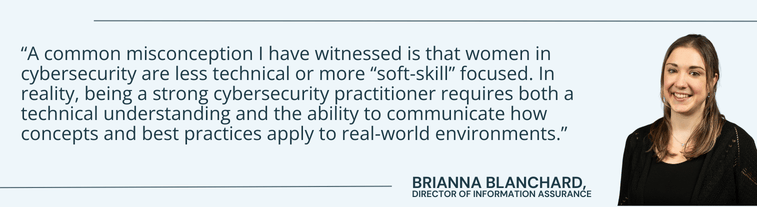
Translating Cognitive Tendencies into Cybersecurity Strengths
Any leader building a high-performance cyber team should start with the same question that drives every winning organization: Who sees the field differently?
Because in cybersecurity, vision isn’t about eyesight. It’s about perception, the ability to see meaning in chaos. And perception, like strategy, isn’t uniform. Every analyst, threat hunter, and engineer brings a different way of processing information. Those differences are not friction; they’re force multipliers if leaders know how to use them.
Across years of neuroscience, behavioral, and operational data, several broad cognitive tendencies emerge. Think of them as mental archetypes, not stereotypes — patterns of reasoning that, when blended across a team, form a defense with both depth and speed.
1. The Spatial Operator — Pattern Recognition and Rapid Action
Some minds are wired to detect structure in noise. They can visualize attack paths before they unfold, trace lateral movement through network maps, and “feel” where anomalies belong.
These are the hunters, the rapid responders, the analysts who thrive in kinetic moments. They often excel in:
- Detection engineering and incident response: spotting unusual data flows or system behaviors before alerts trigger.
- Red teaming: building mental models of infrastructure quickly to find weak seams.
- Forensics: visualizing sequence and cause-and-effect in complex evidence trails.
Their strength is instinctive pattern matching and decisive execution — the cognitive equivalent of a striker seeing the goal open for a split second and taking the shot.
2. The Integrator — Context and Causality
Other minds naturally operate at the edge of logic and empathy. They see not just the incident, but the intent behind it — the narrative of the attacker, the motive, the psychology.
These are the context architects, the analysts who build meaning from fragments and weave together disparate signals into insight. They excel in:
- Threat intelligence: correlating social, geopolitical, and behavioral data to anticipate campaigns.
- Deception and counterintelligence: thinking like the adversary to predict how they adapt.
- Governance and strategic policy: translating risk into actionable language for leadership and mission planning.
They bring the cognitive calm of a midfielder who sees the whole field, waits for the pattern to emerge, and passes into space before anyone else saw it.
3. The Calibrator — Risk and Precision
A third group naturally balances speed with caution. They weigh tradeoffs, check assumptions, and refine process. These are the stabilizers, the engineers and analysts who prevent the system from overreacting or burning out. They shine in:
- Security architecture and compliance: aligning technical measures with mission priorities.
- Vulnerability management and patch governance: managing noise, prioritizing by impact.
- Program management and incident retrospectives: distilling lessons without blame, strengthening process integrity.
They think like defensive midfielders, the ones who rarely make highlight reels but hold entire systems together.
4. The Connector — Human Signal and Trust
Then there are those who read people better than packets. They sense morale shifts, understand fatigue, and can defuse a crisis before it fractures a team. They are the human radar of cybersecurity. They excel in:
- Insider threat programs and behavioral analytics: interpreting intent where the data looks clean but something feels off.
- Awareness and engagement: turning policy into culture.
- Leadership and coaching: translating high-stress technical environments into sustainable human performance.
They’re the captains — the ones who bind the squad when pressure mounts.
When you put these archetypes together intentionally, balancing spatial operators, integrators, calibrators, and connectors — you don’t get redundancy; you get resilience. It’s cognitive depth. One mind acts, another validates, a third contextualizes, a fourth keeps the team intact.
Most cyber teams stumble not because of a lack of skill, but because they’re cognitively homogenous. They hire for a single archetype: fast, technical, adversarial — and then wonder why strategy, empathy, or endurance lag behind. A team of sprinters might start strong, but it rarely finishes the marathon.
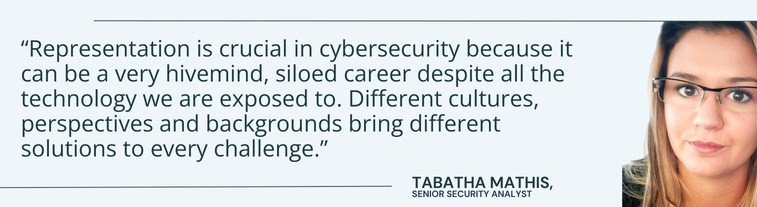
Emma Hayes would call this mistake what it is: bad roster design. The goal isn’t to field eleven identical players; it’s to field a system that can solve multiple kinds of problems simultaneously. Cybersecurity is no different.
In the high-velocity world of threat operations, the real asymmetric advantage isn’t technology — it’s the collective cognition of the humans running it. Pattern thinkers detect. Integrators interpret. Calibrators stabilize. Connectors sustain. Together, they create an organization that can absorb chaos, adapt in real time, and counterstrike with precision.
That’s the future of cyber defense — teams built not just on technical specialization, but on cognitive orchestration.
Operational Roles Where These Strengths Pay Off
Once you start looking at cybersecurity through the lens of cognition, the field reorganizes itself. What used to look like departments or silos starts to look like positions on a field.
Each role demands a slightly different mix of perception, reasoning, and emotional intelligence. And like any elite team, balance — not uniformity — is what makes it unbreakable.
Here’s how those natural variations in thinking translate across the electronic battlefield.
Threat Intelligence — The Integrator’s Arena
Threat intelligence isn’t about reading feeds or compiling indicators; it’s about interpreting human intent.
The best threat analysts think like anthropologists with command-line access — they connect dots across geopolitics, ideology, language, behavior, and infrastructure.
Cognitive diversity here is decisive: integrative thinkers excel at synthesizing incomplete data into narrative, while spatial pattern-thinkers can trace infrastructure overlaps others miss.
People who often exhibit stronger contextual reasoning and pattern integration, tend to build richer analytic narratives and identify multi-stage campaigns earlier in their development. This isn’t about empathy versus logic — it’s about precision through perspective.
Good threat intel fuses both: the pattern-hunting logic of a red-teamer with the contextual empathy of a sociologist.
When done right, intelligence becomes predictive rather than reactive — the same way a midfielder anticipates a counterattack before it starts.
Red Teaming and Adversarial Simulation — The Spatial Operator’s Playground
Offensive security rewards creativity, audacity, and systems thinking.
Red teamers need to model how defenses respond under pressure and exploit the unseen pathways that others overlook.
The most lethal red teams combine two kinds of minds:
- Spatial operators, who can visualize the architecture and map multi-layered attack paths instinctively, and
- Integrators, who think like storytellers, weaving human deception, timing, and psychology into the exercise.
Gender diversity strengthens this space precisely because adversaries themselves don’t all think alike.
A male-dominated red team might unconsciously favor brute-force or speed-driven tactics; a more balanced team might blend technical craft with social engineering precision, mimicking the wide behavioral spectrum of real attackers.
That range makes exercises sharper, more authentic, and ultimately more dangerous — in the way a defense most needs them to be.
Blue Team / Detection Engineering — The Calibrator’s Domain
Detection engineering and monitoring are the art of balance.
Move too slow and you miss the threat; move too fast and you drown in false positives.
Calibrators — those with a natural bias toward risk evaluation, detail, and consistency — are essential here.
They translate chaos into logic, writing detections that are sensitive but not noisy, resilient but not brittle.
This is where the mental discipline of measured thinkers pays off.
They aren’t paralyzed by perfectionism; they’re patient enough to find the signal that actually matters.
They maintain the operational tempo of a goalkeeper — always scanning, predicting, correcting — never losing composure no matter how many shots are coming in.
Incident Response and Crisis Management — The Connector’s Crucible
When the breach lands, systems wobble, and priorities collide. This is where the connector steps to the bridge: clear voice, clean lanes, steady tempo. “What we know. What we’re doing.” With their calm and steady hand are the ones to best start the communication cadence.
Connectors read people as precisely as packets. They spot the responder who’s flooding, the analyst who’s freezing, the exec who needs time-boxed truth. They tune the room—slow the adrenaline, narrow the aperture, one decision at a time. Telemetry becomes action; tension becomes momentum.
Under that leadership, containment is precise rather than performative, fatigue is managed instead of ignored, and the post-incident review is honest enough to matter. Teams led by connectors recover faster, retain more talent, and turn lessons into muscle memory. Calm isn’t a vibe—it’s an operational advantage.
Governance, Policy, and Strategic Risk — The Integrator and Calibrator Alliance
This is the theater of translation — where technical reality meets political consequence.
The best governance and risk professionals understand how to speak two dialects at once: the language of engineers and the language of executives. Integrative thinkers bring the ability to frame risk as story, consequence, and probability; calibrators bring the discipline to codify it into repeatable process.
Together, they form the connective tissue between operations and leadership — ensuring strategy isn’t detached from reality.
This is where many organizations stumble: they hire policy people who don’t understand the technology or engineers who can’t communicate uncertainty. Cognitive balance here prevents both extremes.
Product Security and Secure Design — The Empathic Engineer’s Frontier
If the future of security lies in design, empathy becomes a weapon.
Product security demands the ability to anticipate how users will misuse, misunderstand, or manipulate systems.
That means integrating human-centered design with adversarial thinking — two cognitive styles that rarely coexist without intention.
Diverse teams, particularly those including women and neurodiverse engineers, tend to produce software that’s more secure because they consider more threat vectors, more misuse cases, and more accessibility risks.
They imagine not only what a system should do, but what a clever or desperate human might make it do.
Secure design is not purely a technical discipline; it’s social engineering in reverse.
Leadership and Team Command — The Asymmetric Commander
Leadership is its own battlefield — a place where the wrong cognitive mix can quietly erode everything below it.
The future of cybersecurity leadership will belong to asymmetric commanders: leaders who design culture with intent, curate cognitive balance, and understand that diversity of thought is not decoration — it’s armor.
Commanders like that don’t hire for familiarity; they hire for friction that produces clarity.
They reward “truth-tellers,” not “yes-men.” They design organizations where different kinds of thinking are not just tolerated but essential.
Emma Hayes calls this living the culture, not laminating it.
In cyber, that means blameless retrospectives, clear career pathways, deliberate mentorship, and structured emotional resilience training.
It means building an environment that allows every type of mind to operate at full potential, without apology or exhaustion.
Every domain of cybersecurity, from the policy desk to the keyboard, benefits from the orchestration of difference. That orchestration is leadership’s new art form — not diversity as compliance, but diversity as asymmetric advantage.
When the Adversary Thinks Differently
The first mistake any defender can make is assuming the adversary thinks like they do.
That assumption blinds us in every domain — from the battlefield to the boardroom.
In cybersecurity, it can be fatal.
Every attacker operates within their own mental model: shaped by training, experience, culture, and sometimes even gendered social conditioning.
A North Korean APT cell will approach intrusion differently than a freelance Eastern European ransomware crew.
A social engineer raised in patriarchal power structures will play authority and empathy differently than one who grew up learning to navigate social constraint. These aren’t stereotypes — they’re strategic realities. The better you understand how your adversary reasons, the faster you can exploit their predictability.
Emma Hayes would call this reading the opponent’s (field) shape — the dynamic way a team moves, reacts, and exposes space. She doesn’t coach her players to mirror opponents; she coaches them to interpret them — to sense rhythm, anticipate decision patterns, and weaponize timing. That’s precisely what cyber defenders must do as warfare becomes more psychological, more automated, and more human at the same time.
Gendered Decision Rhythms in Adversarial Behavior
Neuroscience and behavioral economics show that risk perception and decision style are influenced by both biology and environment.
Men, on average, take faster, higher-risk actions under uncertainty. Women, on average, integrate more contextual data and calibrate risk more precisely before committing. Again…not absolutes, but population-level tendencies that manifest in team dynamics.
When you observe APT campaigns or ransomware operations, those tendencies can occasionally be inferred at scale. Groups dominated by impulsive or status-driven decision-makers tend to move fast, probe recklessly, and repeat successful exploits until they burn out the infrastructure.
Others, often smaller, mixed teams or hybrid human–AI operations — exhibit pattern anticipation, layered misdirection, and patience. Understanding that rhythm, the cognitive tempo of your adversary, allows defenders to build asymmetry into response.
If your opponent favors aggression, you don’t need to outmuscle them; you just need to let their momentum expose weakness. If your opponent favors control and delay, you don’t chase them; you manipulate tempo until they have to move. It’s cyber strategy with a human center of gravity — the same way a great football manager sets traps for a reckless attacking side.
Cognitive Asymmetry as a Defensive Weapon
What gives modern defenders leverage is not just better technology, but the ability to model adversarial cognition.
That means asking:
- What kind of team would make the decisions we’re seeing?
- What cognitive or cultural signatures appear in their tactics?
- Where do they overestimate their own strengths?
Teams that think alike defend alike, and attackers learn their patterns. Teams that think differently create chaos for the attacker’s prediction models. A cognitively diverse SOC, red team, or threat intel group doesn’t just react — it plays psychological chess.
One member sees the pattern; another senses the human motive behind it.
One anticipates escalation; another sees fatigue in the adversary’s activity cycle.
It’s distributed cognition — a defensive equivalent to distributed infrastructure.
This is the cyber version of “positional play” that Hayes uses in football: deliberately positioning different thinkers to occupy mental spaces the opponent doesn’t see.
In her world, it creates tactical width.
In ours, it creates detection depth.
Psychological Countermeasures and Deception
The most advanced red and blue teams already use behavioral profiling.
They analyze not just what attackers do, but how they decide.
A well-designed deception campaign can use gendered or cultural cues to shape those decisions, mirroring trust patterns, exploiting authority biases, or luring attackers into familiar traps.
For instance, some threat actors show statistically higher engagement with persona types that fit their cultural norms of credibility or dominance.
Understanding those psychological markers lets defenders build traps that feel natural to the adversary’s worldview.
This isn’t manipulation; it’s strategy, using human bias to protect human systems.
When the Opponent Is You
But the deeper lesson is this: cognitive asymmetry cuts both ways.
Attackers who build diverse teams, who think across cognitive and cultural boundaries, are evolving faster than defenders who don’t. Some of the most sophisticated adversarial operations today already integrate behavioral science, gender studies, and emotional AI modeling to tailor influence campaigns and phishing lures. They’ve realized what many defenders haven’t: diversity of thought is an offensive weapon.
If we want to win the next era of cyber conflict, we have to start thinking the same way, not to imitate our opponents, but to out-evolve them. Homogeneity might feel comfortable, but comfort is the slow death of adaptation.
The teams that thrive in cyber’s new age will be the ones that think in multiple dimensions, not just multiple layers.
The future of cyber defense won’t hinge solely on faster machines or larger budgets.
It will hinge on whether leaders understand how people think — their own, their team’s, and their adversary’s. And once we accept that cognition itself is the terrain of battle, we can finally begin to design for advantage, not reaction.
Hiring & Team Design Recommendations
Emma Hayes doesn’t draft players to fit a template, she recruits thinkers to fit a system.
That’s the distinction cybersecurity leadership has to internalize.
Hiring in our industry has drifted toward uniformity: the same degrees, the same certs, the same personality archetype — analytical, technical, competitive, often male, often socially reinforced to take risk as proof of confidence. We’ve unconsciously built teams that look different but think the same. That’s not diversity. It’s redundancy.
If cyber is a battlefield of cognition, then talent acquisition is force design.
We’re not just hiring staff; we’re engineering the neural network of an organization.
Here’s what that looks like when done with intent.
1. Recruit for Cognitive Diversity, Not Resume Familiarity
Most job descriptions read like entry barriers, not invitations. They list a hundred technical acronyms and nothing about thinking style, adaptability, or situational judgment.
The message is clear: we value what you know, not how you think.
To break that cycle:
- Rewrite postings to describe mission outcomes rather than a sole focus on checklist skills. (“You’ll help us detect unseen threat patterns” instead of only “must have 5 years Splunk experience.”)
- Include phrases like systems thinker, pattern recognizer, contextual analyst, adaptive problem solver — signals that cognitive style matters.
- Drop unnecessary degree requirements that filter out late entrants or cross-domain thinkers. Some of the best cyber minds started in psychology, art, journalism, or linguistics — the very backgrounds that enrich team cognition.
- Assess learning agility and pattern translation instead of rote recall.
Recruitment should feel like building a roster of complementary thinkers, not cloning last year’s MVP.
2. Interview for How People Think, Not Just What They Know
Emma Hayes often says, “I don’t recruit players, I recruit decision-makers.”
Cybersecurity should follow suit.
Traditional interviews over-index on technical trivia and under-measure reasoning. A strong candidate who pauses to synthesize before answering is often misjudged as hesitant, while a confident improviser gets rewarded for speed. Both can be great hires, but for different roles.
Design interviews to reveal cognitive bias and problem style:
- Scenario-based questions: “You have limited data and two conflicting alerts — walk me through your thought process.”
- Role reversals: Ask an engineer to assess a policy gap or an analyst to design an adversarial narrative. Observe how they reframe problems.
- Pattern-mapping tests: Provide fragments of an incident and ask candidates to hypothesize adversary intent — not to be right, but to see how they connect dots.
In evaluations, replace “did they get the answer” with “how did they think their way there.”
3. Balance the Team Like a Tactical Formation
No single cognitive type can defend the modern attack surface. A team of Spatial Operators will respond fast but burn out. A team of Integrators will build deep context but risk decision paralysis. Calibrators ensure consistency but can struggle with rapid change.
Connectors keep morale high but may avoid necessary confrontation.
The art of leadership is composition — balancing instinctive thinkers with analytical ones, urgency with reflection, empathy with execution. Think like a coach setting a formation:
- SOC / IR Team: Blend high-tempo responders (operators) with integrative threat analysts and calm connectors for crisis moments.
- Threat Intel Team: Combine geopolitical integrators, technical data-hunters, and behavioral calibrators.
- Security Architecture / GRC: Pair rule-makers with systems-thinkers — those who understand why controls exist, not just how.
- Leadership tier: Mix operational command with emotional intelligence. The best incident commanders know when to stop talking and start listening.
Great teams aren’t assembled by job title. They’re orchestrated by cognitive contrast.
4. Create Parallel Career Tracks: Technical Mastery and Leadership
One of the biggest reasons women and diverse talent exit cybersecurity is that career growth often requires switching from “expert” to “manager.”
That’s not always aligned with motivation or strength.
Design dual career tracks:
- Technical mastery track for deep specialists who want to grow in influence without managing people. Think in terms of Principal-type roles.
- Leadership track for those who want to architect systems and culture.
Both tracks must be equally prestigious and compensated. This prevents “promotion through attrition” — losing technical brilliance to forced managerial conversion.
Emma Hayes understood this intuitively. Her teams had captains who led vocally and others who led by presence and consistency. Both were indispensable.
5. Evaluate Teams as Ecosystems, Not Hierarchies
Performance reviews usually measure individuals in isolation, ignoring interdependence.
But a team is a living system, resilience is collective.
Shift the measurement lens:
- Track team performance metrics like alert accuracy, escalation clarity, detection-to-response time, and post-incident knowledge reuse.
- Reward team-based innovation — a playbook improved, a process automated, a false-positive ratio halved — not just personal heroics.
- Use periodic cognitive audits: map which thinking styles dominate the team and identify missing archetypes. If everyone’s a sprinter, hire a strategist.
This approach reframes leadership as orchestration, not command.
6. Lead Hiring Panels That Reflect the Future, Not the Past
A homogenous interview panel replicates itself.
To break the loop:
- Include diverse genders, disciplines, and seniority levels in hiring decisions.
- Rotate interview leads so evaluative tone shifts between empathy, logic, and risk tolerance.
- Train interviewers to identify and correct bias toward personality confidence, the subtle factor that often skews against women and quieter candidates.
When panels are diverse, they select for capability, not comfort.
7. Incentivize Mentorship as an Operational Function
Mentorship should be part of incident readiness, not an HR afterthought.
Pair new analysts with veterans by cognitive complement, not just seniority. A high-tempo responder learns patience from a calibrator; a methodical engineer learns agility from a risk-taker. Make mentoring a performance objective — a KPI tied to retention and learning outcomes.
This normalizes cross-pollination and accelerates skill maturity.
8. Design for Psychological Sustainability
Hiring is meaningless if the environment breaks people. Schedule design, rotation policies, and after-action support must protect mental bandwidth.
- Build sustainable on-call rotations — four weeks on, four weeks off — with cross-trained backups.
- Implement recovery windows after major incidents. The military calls it reset time; cyber needs it too.
- Offer coaching programs for stress regulation, decision fatigue, and cognitive resilience.
Hayes calls this calm under chaos. In sport and cyber alike, burnout doesn’t happen from workload alone — it happens from lack of control.
9. Make Hiring an Extension of Strategy
Finally, treat recruitment as long-term force design. Each hire shifts your organization’s cognitive DNA. Build around the threats you expect to face.
If your adversaries favor automation and AI, hire human improvisers. If they favor human manipulation, hire behavioral scientists. If they exploit system trust, hire calibrators and red-teamers who love control theory.
Emma Hayes built squads for different kinds of opponents; cybersecurity must do the same. The goal isn’t to fill seats. It’s to build a collective mind that can think faster, deeper, and more creatively than anything it faces.
Hiring and team design are not administrative tasks — they’re acts of strategy.
Risks, Pushback, and Ethical Considerations
Every meaningful shift in doctrine attracts friction. The moment you talk about gender and cognition in the same sentence, someone will accuse you of stereotyping, essentializing, or politicizing a field that should be about skill and merit. That tension isn’t a reason to stay silent, it’s a reason to lead carefully.
The goal of this discussion is not to label people, but to understand how different ways of thinking create advantage. If we can acknowledge that cognitive variety strengthens a SOC the same way positional variety strengthens a football team, we can talk about gender without turning it into ideology. But that takes precision.
1. Avoiding Essentialism: Difference Is Context, Not Destiny
The moment we say “men think this way” or “women think that way,” we oversimplify the vast complexity of human cognition. Biology influences patterns; culture and experience shape everything else.
Neuroscience shows aggregate trends, not absolutes. A woman raised in a high-risk, competitive environment might develop a decisiveness that outpaces any male peer. A man mentored by a collaborative leader might exhibit integrative, context-rich thinking. These are not contradictions; they’re the point.
The strength of this philosophy lies in probability, not prescription. We’re not assigning roles based on gender; we’re designing systems that value a spectrum of cognitive inputs — however they emerge.
If your takeaway is to put women in “empathy” roles and men in “technical” ones, you’ve missed the entire playbook.
2. Beware the Optics of Tokenism
The fastest way to kill credibility is to turn representation into theater. Token hires or symbolic promotions without power insult everyone, both those elevated and those observing.
Emma Hayes warns against “performative inclusion.” In sport, she says, if you add a player just to check a box, you destroy the culture you’re trying to build. The same applies in cybersecurity.
Don’t recruit women into a toxic team and call it progress. Fix the culture first. Build systems where every voice carries operational weight, where inclusion isn’t a committee but a consequence of how decisions are made.
Diversity without influence is decoration.
3. Balancing Data and Dignity
As leaders begin to measure cognitive diversity, the temptation is to turn humans into data points. There’s a line between analytics and intrusion.
Surveys and metrics should empower, not expose. If analysts fear their answers will affect promotions or reputation, honesty dies and so does learning. Make participation voluntary, anonymize responses, and share results transparently.
Quantify systems, not people. Measure behavior patterns and outcomes, not personality traits. Culture thrives when curiosity replaces surveillance.
4. Expect Resistance, Especially from the Familiar
When you build new playbooks, those who thrived under the old ones will feel threatened.
Expect pushback: “We hire for merit, not diversity.” “You’re lowering the bar.” “We don’t have time for this.”
Those statements are rarely about malice; they’re about discomfort. They come from people who equate difference with dilution. The antidote is evidence.
Show them the metrics: faster detection, lower turnover, sharper playbooks. Show them how culture became performance. Eventually, the conversation stops being about fairness and starts being about winning.
As Emma Hayes says, “Once people see what works, they stop arguing with it.”
5. Guarding Against Reverse Bias
It’s tempting, when correcting imbalance, to swing too far in the other direction, to favor one group over another in pursuit of equilibrium. That’s not progress; it’s pendulum chaos.
The point isn’t to invert power; it’s to distribute it. Every individual, regardless of gender or background, deserves to be valued for their cognitive contribution, not their demographic.
Real equity isn’t favoritism; it’s frictionless access to opportunity.
6. Respecting Privacy and Identity
Not everyone wants to be defined by their gender, identity, or thinking style. Some people just want to do their jobs and be treated as professionals.
Leadership must respect that. Inclusion doesn’t require extraction, you don’t need to interrogate identity to build trust. Instead, build systems that are identity-safe: where people can contribute authentically without being labeled, spotlighted, or tokenized.
The best environments make difference visible but never weaponized.
7. Ethical Responsibility in the Age of Behavioral Insight
As behavioral and cognitive science weave deeper into cyber defense — from threat intel to deception ops — we must tread carefully.
Modeling adversary psychology is a strategic advantage; manipulating employees’ psychology is an ethical failure.
Set clear boundaries:
- No psychological profiling for employment decisions without consent.
- No using cognitive assessments to rank people’s worth.
- No AI-driven “fit” algorithms that reduce complexity to bias-laden predictions.
Ethics is part of resilience. The moment your people stop trusting how you use data about them, you’ve already lost your advantage.
8. The Leadership Mirror
Leaders who talk about diversity must be prepared to examine their own bias, fatigue, and blind spots.
That means asking hard questions:
- Do I reward the voices that sound like mine?
- Do I unconsciously gravitate toward familiarity?
- Do I confuse confidence with competence?
Introspection isn’t weakness; it’s maintenance.
Every leader is a product of their own conditioning. The most dangerous ones are those who refuse to admit it.
9. The Discipline of Humility
The greatest danger in this conversation is hubris — believing we’ve “figured people out.” We haven’t.
Human cognition is vast, fluid, and context-dependent. The second we think we’ve mastered the psychology of our teams, we stop learning.
Emma Hayes leads with humility. She knows that what worked yesterday might fail tomorrow because the people — and the world — change. Cybersecurity must do the same.
Humility is the last unspoken pillar of resilience. It keeps the playbook alive.
10. The Ethical Advantage
Here’s the paradox: the same empathy that helps us retain diverse teams also makes us better defenders. Attackers exploit human weakness: vanity, greed, loneliness, ideology.
Defenders who understand human complexity, who lead with dignity and moral clarity, build systems that are harder to manipulate because the people inside them trust each other.
Ethics is not a compliance checkbox. It’s a countermeasure.
A culture that values difference, honesty, and restraint doesn’t just feel better — it fights better.
The Playbook: Closing and Call to Action
When Emma Hayes talks about football, she’s not really talking about football.
She’s talking about life, pressure, and the power of people who think differently. Her book A Completely Different Game isn’t a manual for sport — it’s a manifesto for leadership in high-stakes environments.
She teaches that success doesn’t come from perfection; it comes from the choreography of imperfection — the ability to make different minds move as one without erasing what makes them unique.
Cybersecurity, for all its technical veneer, is no different. It’s the world’s largest continuous team sport, played in real time, across invisible fields, where every second counts and no one gets to pause the clock.
We don’t lose because we’re weak; we lose because we’re predictable. We hire for sameness, train for conformity, and reward the narrowest form of excellence. Meanwhile, our adversaries are adapting, blending human psychology, automation, AI, and disinformation with ruthless creativity. They already understand the value of cognitive diversity because they weaponize it.
Our response can’t be incremental. It has to be asymmetric.
That starts with leadership willing to break the old model. Leaders who stop hiring replicas and start recruiting decision-makers. Leaders who treat mentorship, emotional intelligence, and psychological safety as operational necessities, not perks. Leaders who know that diversity isn’t a checkbox; it’s the architecture of resilience.
The future cyber battlefield will not be won by the loudest voices or the longest résumés. It will be won by teams designed like neural networks — distributed, adaptive, balanced between intuition and analysis, speed and patience, empathy and precision. Those teams will detect earlier, recover faster, and endure longer because their strength isn’t built on any single person. It’s built on how they think together.
If we ignore that, if we cling to the comfort of homogeneity and the illusion of the hero, we will find ourselves outpaced by adversaries who learn faster than we do. But if we embrace difference with intent, if we engineer environments where every cognitive strength has a purpose, we will hold the high ground of the electronic battlefield.
Because in the end, cybersecurity isn’t just about code, controls, or compliance. It’s about cognition. It’s about people — the way they perceive, decide, and connect. It’s about giving every mind a place to play its best game.
Hayes calls it “living the culture.” In cyber, that means making inclusion operational, making empathy tactical, and making leadership accountable for both.
The next evolution of cybersecurity will not be powered by tools or frameworks.
It will be powered by human intelligence — plural, messy, brilliant, and diverse.
The playbook is already written. We just need to stop laminating it — and start living it.
Don't miss another article. Subscribe to our blog now.
Included Topics